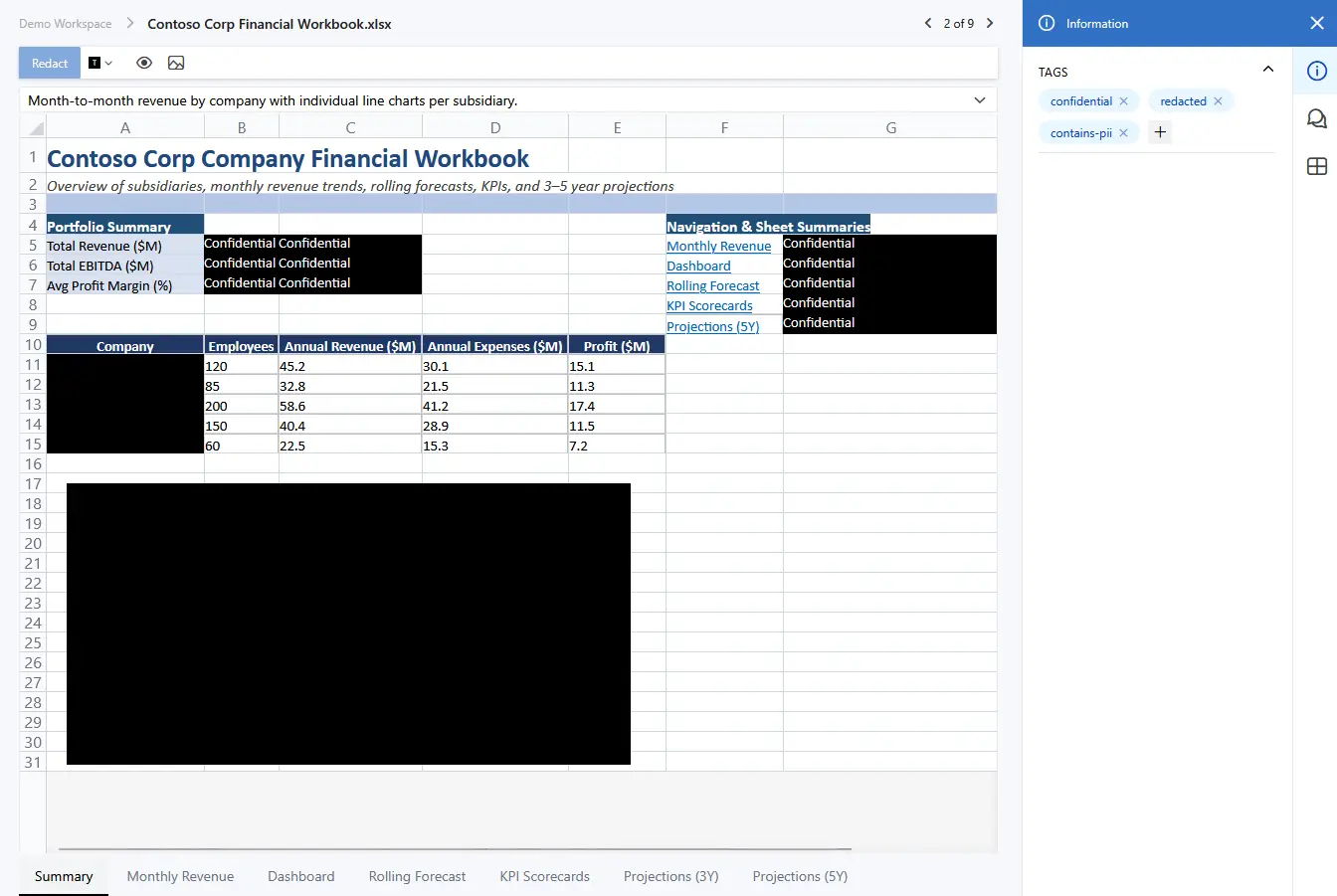
Blackout took eDiscovery by storm when it added Excel native redaction to Relativity. It has powered mass automated projects and made redacting previously impossible volumes of documents achievable. Today, Blackout’s loyal users include document experts at AM 100 law firms, top service providers, Big Four advisory firms, and major government organizations. It’s also the code that makes Excel redaction possible with both Relativity Redact and Reveal Redact.
With over 7 billion redactions placed, and multiple software awards in the rearview, the next era of Blackout (and redaction) is here!
The standalone, cloud-based version of Blackout already boasts parity to redaction with our world-class Relativity Server experience, and will soon include breakout releases that provide:
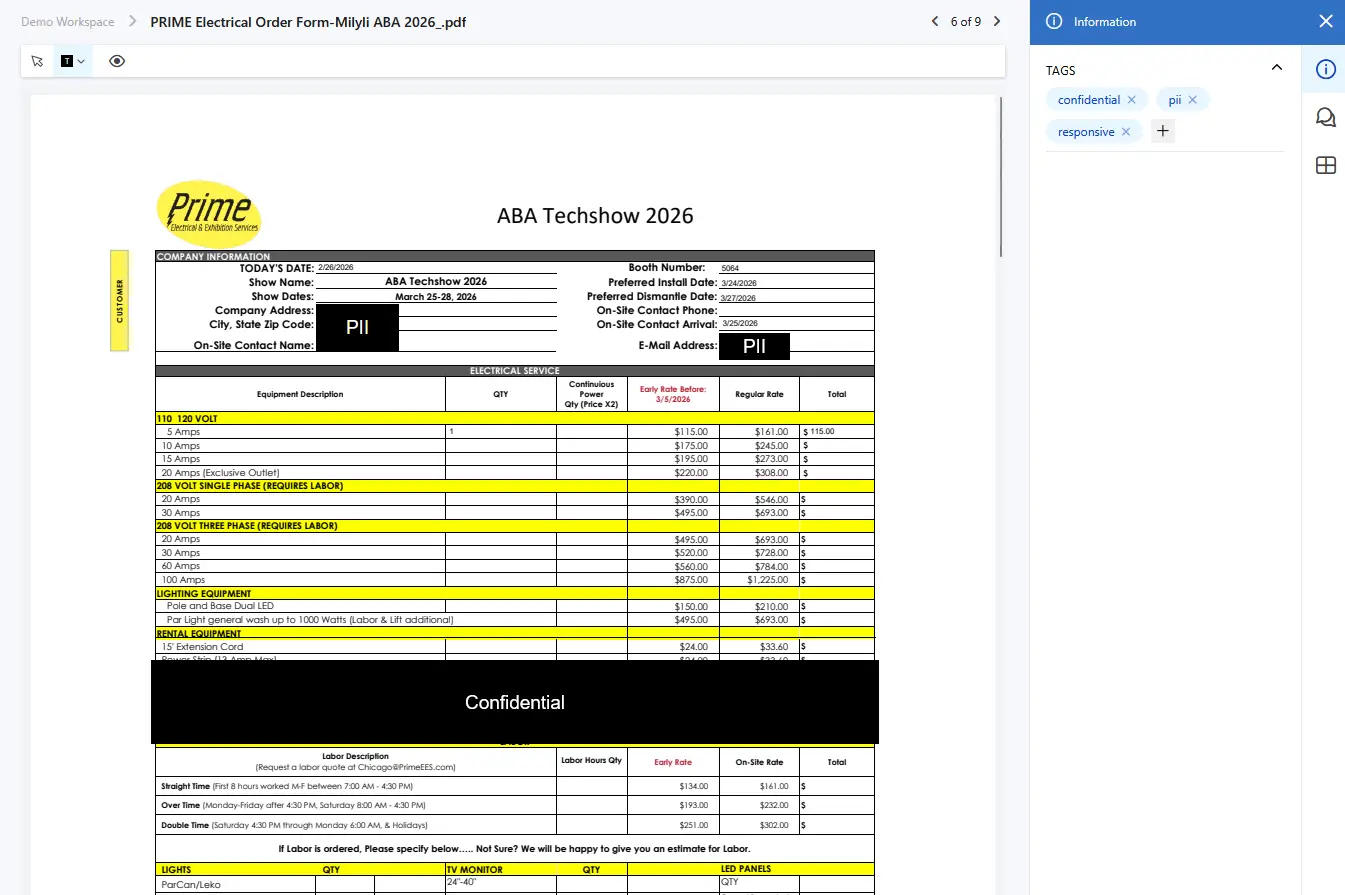
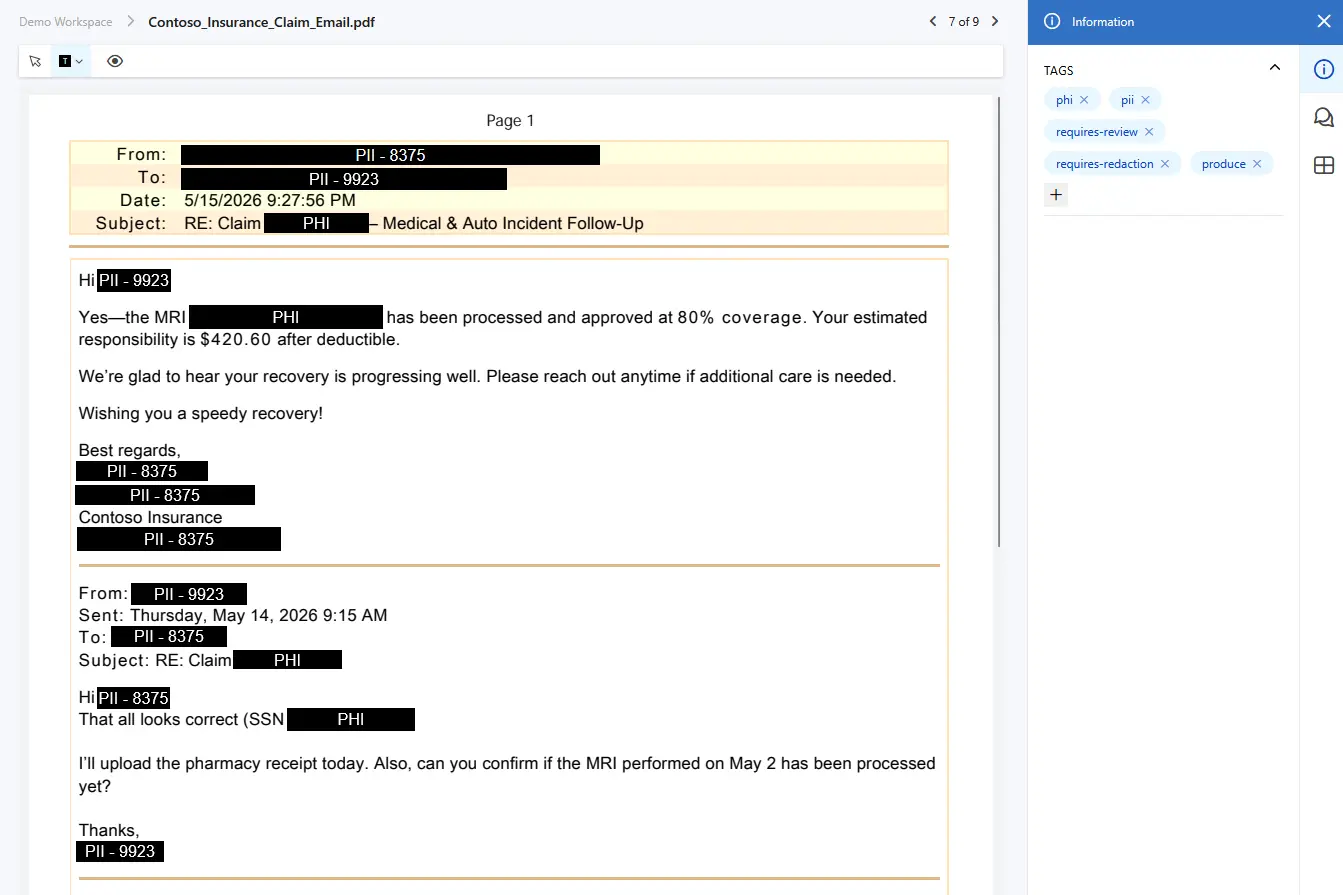
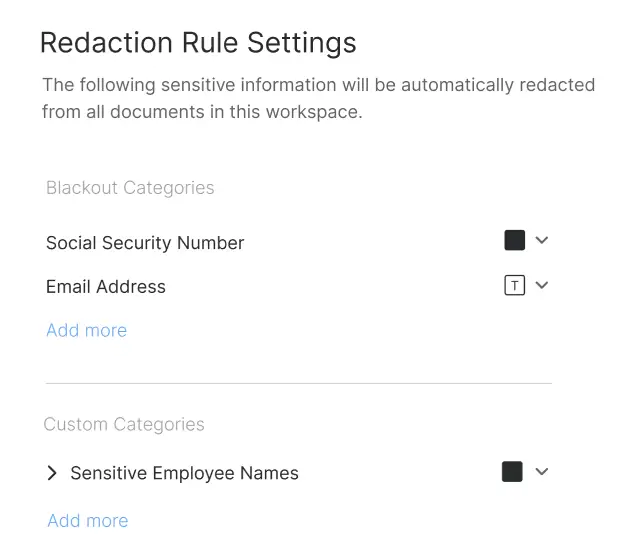
- Automated PII and privileged information detection.
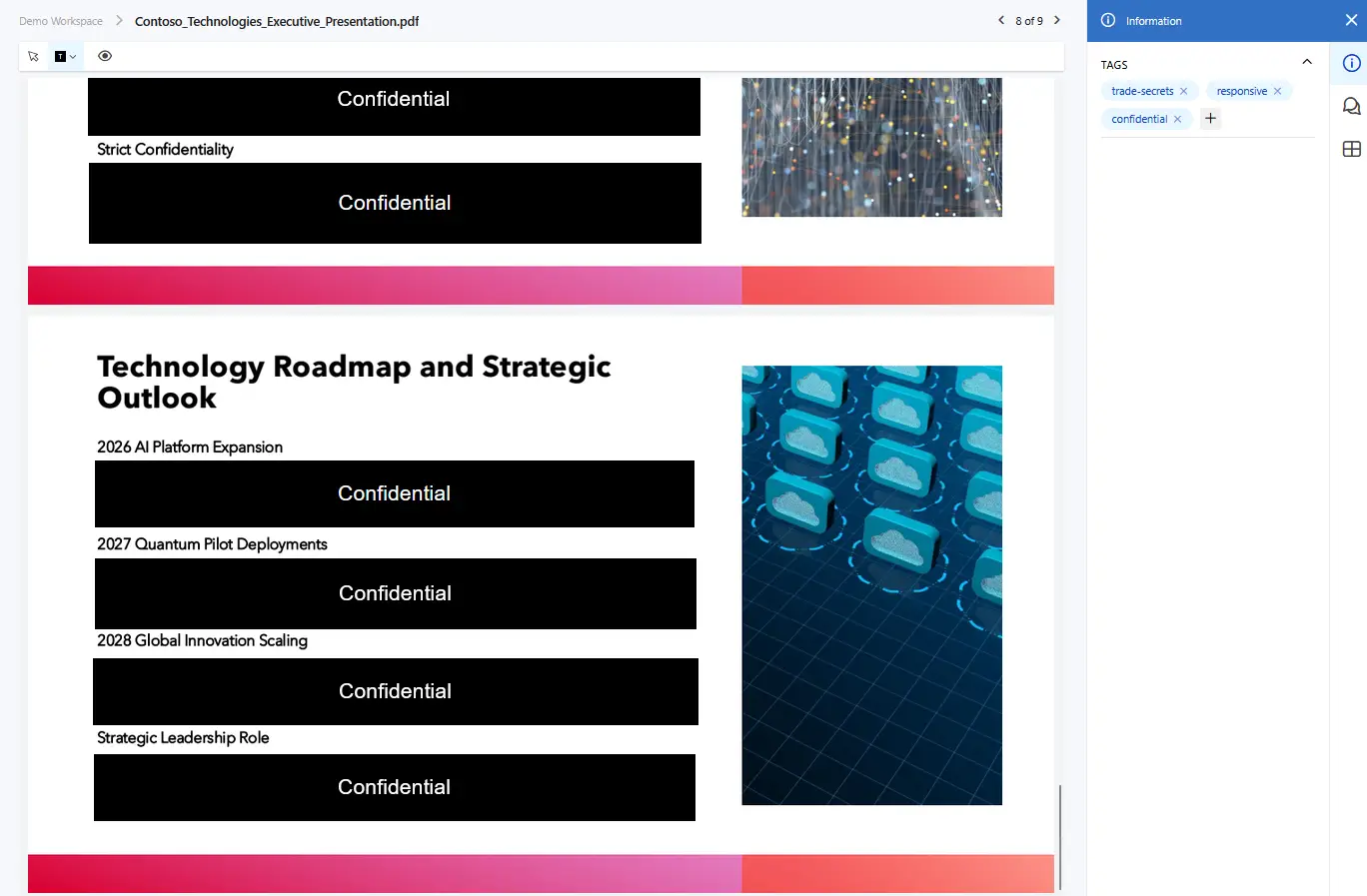
- Automated redactions based on information type, industry terminology, and use case categories.
- Support for email files, Microsoft Office file types, and much more.
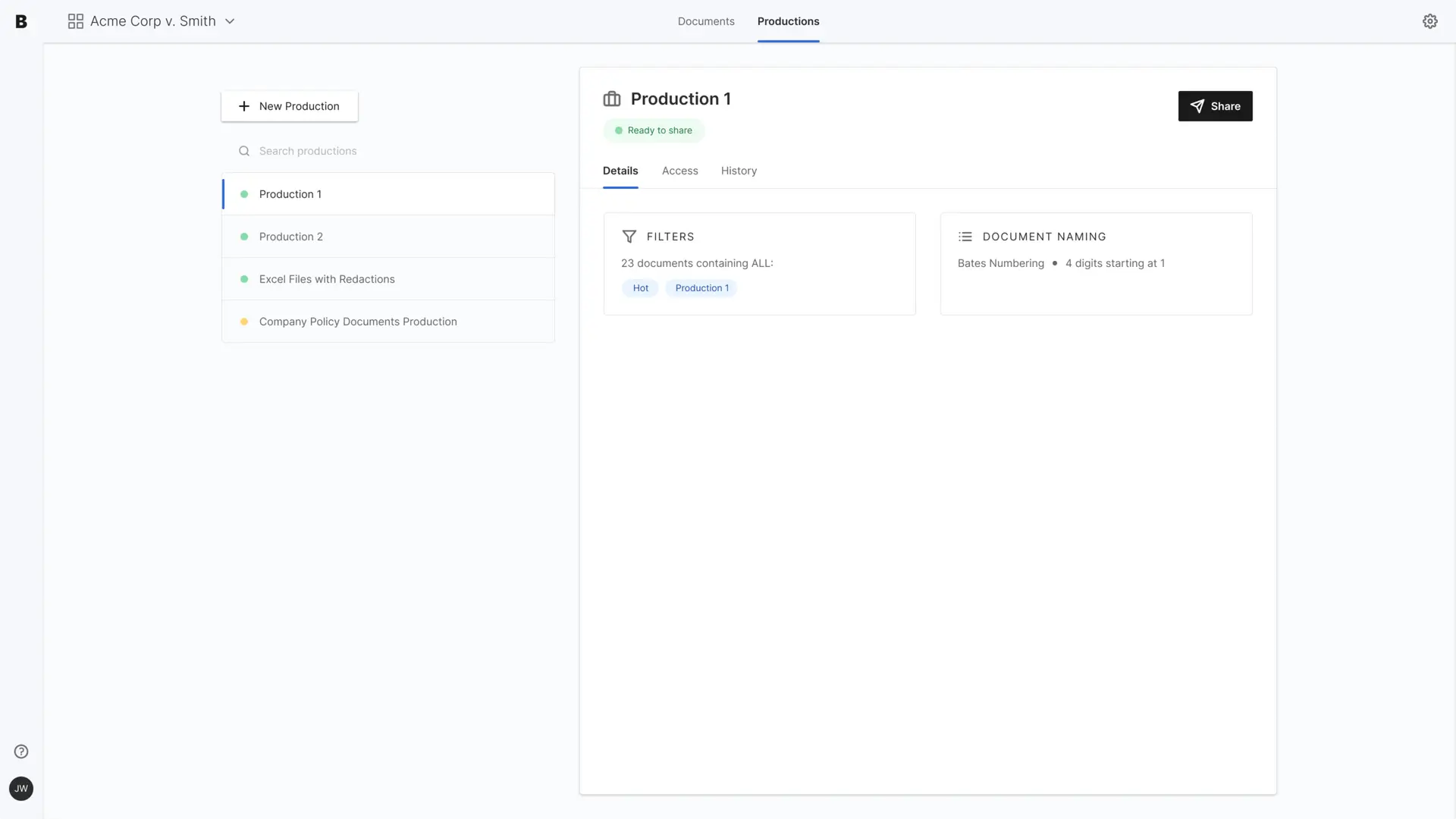
- Robust sharing options for securely delivering productions to third parties, opposing counsel, or internal teams.
- Rich workspace customization including auto-tagging, work assignments, and configurable word and phrase detection.
- Support for data collection integrations with critical platforms like Microsoft OneDrive or Google Drive.
Three Strategic Needs Blackout Addresses
This spring, the Blackout team attended Legalweek, CLOC, ABA, and ALA conferences to speak with legal eagles and tech experts outside of the Relativity ecosystem. Here are some of the ways Blackout directly solves for challenges like those we discussed.
1. Retain More Control Over Sensitive Information
Converting Excel files to PDF, maintaining large, shared folders, and Adobe Acrobat’s habit of crashing were frequent sources of frustration with the teams we met with.
We shared how Blackout allows users to complete sensitive information workflows from start to finish—without crashing when opening that 20MB PDF. With critical functions like native Excel redaction and integrated sharing, we’ve built Blackout in a way that the powerful features of large-scale tools can now be leveraged by teams of any size.
Tim reflected:
Blackout lets users upload, tag, redact, and share materials for any compliance or legal matter.
2. Cut the Costs of Borrowed Capacity
Service providers play a critical role in informing legal strategy and managing large, ongoing matters. But they aren’t needed for everything.
Steve recalled:
Using Blackout keeps sensitive information and documents in-house and improves margins of performance by not adding time to work that is otherwise quickly self-managed.
3. Adapt to Modern Volumes and Standards
Mismanaging sensitive information is increasingly costly, and heavily regulated industries and enterprises must ensure defensible work product despite increasing workloads.
Tim shares:
The bottom line is that PDF editors are too simple for managing sensitive information, and enterprise eDiscovery systems are too much. Blackout aims to meet the everyday needs found in the middle.
Wrangle the Realities of Redaction
The largest factor driving a need for specialization in managing and protecting sensitive information is the expansion and adoption of stronger, more comprehensive data privacy laws – the GDPR, CCPA, and so on.
These laws put additional pressure on businesses to conduct more comprehensive document review and thorough investigations, and, in turn, to redact sensitive data. While many tools and platforms boast redaction capabilities, the features are often surface-level effective and produce materials inadequate for meeting compliance, regulatory, and legal requirements.
Trust that your software partners take security seriously. Implementing strong controls and security best practices need to be central to their operation if you include their software in your tech stack.
We’re thrilled to share that, as of June 18, 2026, we have completed our Type 2 SOC 2 audit!
Establish True End-to-End Operations
Blackout does not replace important strategic relationships. It replaces churn, expenses, and bad work product often created when teams need to delegate to newer or junior team members. At the core of our platform is an easy-to-use tool that ensures that redactions are always placed safely, securely, and accurately. When you draw a redaction box with Blackout, you have the certainty that the underlying content can never be uncovered.
A true end-to-end solution enables users to easily and quickly identify, find, and protect all their sensitive information. Not only will Blackout leverage technology like entity recognition and natural language processing to find sensitive info in context, but it will also learn from users’ past interactions – without model training.
Blackout will make suggestions not only based on what is being worked on, but also what may have been missed!
Ensure Defensibility with Enterprise Features
Until there is a universal standard for sharing documents between opposing parties, the utmost care is needed to produce secure, defensible work product that is also correctly labeled, transmitted, and stored. Again, Blackout can help.
Blackout offers the enterprise tooling large legal service providers and eDiscovery reviewers use, but, it’s also tailored for users who may require a more structured workflow. Collecting, producing, and sharing properly does not need to be an esoteric, cloak-and-dagger process.
Ready to try Blackout?
Outsourcing redaction often means paying for unnecessary or duplicative work. Vendors frequently perform multiple rounds of processing passes on collected documents. It not only drives up the cost of redactions, but organizations end up paying for the confidence that their documents have been redacted correctly, when the technology used should assure them of that.
With Blackout’s time-tested redaction engine, reduce costs, streamline workflows, and trust that your sensitive information will be protected properly. Achieve the peace of mind and defensibility of an enterprise-grade solution without the enterprise price tag.
Contact us today to see how Blackout can simplify your redaction process and deliver immediate value!
![Step 1 [Automation] - Built-In-Redaction-Rule-Design](https://blackout.now/wp-content/uploads/2026/07/Step-1-Automation-Built-In-Redaction-Rule-Design-1.webp)
![Step 2 [Automation] -Custom-Redaction-Rule-Design](https://blackout.now/wp-content/uploads/2026/07/Step-2-Automation-Custom-Redaction-Rule-Design-1.webp)
![Step 3 [Automation]Redaction-Rule-Workspace-Design](https://blackout.now/wp-content/uploads/2026/07/Step-3-AutomationRedaction-Rule-Workspace-Design-1.webp)
![Step 4 [Automation] Auto-Redact-Results-Design](https://blackout.now/wp-content/uploads/2026/07/Step-4-Automation-Auto-Redact-Results-Design-768x389.webp)